
What Does a Marketing Agency Actually Do?
Most business owners, if we’re being honest, don’t fully know what they’re paying for when they hire a marketing agency. So, let’s strip it back.

When someone says, “we hired a marketing agency,” that could mean a lot of different things. It might be someone running ads, posting on Instagram, redesigning a website, or, in some cases, actually helping drive real business growth.
The problem is that those aren’t the same thing. Not even close. And that confusion is exactly why so many businesses end up feeling like marketing is expensive, results are all over the place, and agencies are hard to trust.
So, what’s really going on behind the scenes?
Marketing today is a lot bigger than it used to be. Even small businesses are now expected to juggle social media, SEO, paid ads, content, websites, email, and analytics. And yes, all of these channels can drive growth, especially when they’re used together and guided by data. But that’s where things usually break down as most businesses don’t struggle because they lack tools. They struggle because there’s no clear coordination or decision-making behind those tools.
Ok… but what should a marketing agency actually be doing?
On the surface, agencies execute tasks. That’s the visible part. But that’s not where the real value lies.
A good agency operates on three levels:
1) Vision
Before it all, there’s direction, which ironically, is the part most people skip. Before anything gets done, someone needs to analyse the plan, current environment, market, goals, etc and answer some fundamental questions: what are we trying to achieve, where is growth supposed to come from, what’s not working, and just as importantly, what should we stop doing?
Without clear direction, marketing becomes reactive. Budgets get scattered across disconnected activities, and nothing really compounds.
2) Strategy
This is where things tend to get misunderstood. Marketing isn’t social media. It isn’t SEO. It isn’t ads. It isn’t your website. It’s how all of those pieces work together.
When your website, your ads, and your content are aligned, something powerful happens: people start to recognize your brand, remember it, and trust it. That consistency across touchpoints doesn’t happen by accident: it’s built.
3) Execution
Also known as the part most people think of when they hear “marketing agency.” Campaign creation, ads, content, design, website updates, events, emails, outdoors, you name it… Which are all important, no questions here.
But execution without direction and strategy is just expensive activity. It looks like progress, but it rarely is.
Why do so many businesses get this wrong?
Because they hire agencies for the wrong reason. They think, “I need someone to do marketing for me”, but what they actually need is clarity on what drives growth in their business.
That gap is what leads agencies to jump straight into tactics, businesses to end up with fragmented efforts, and results that feel unpredictable at best.
Now, to be fair, there are moments when hiring an agency makes perfect sense.
If you’ve hit a ceiling: growth has slowed, things feel inconsistent, and you’ve tried multiple approaches with no clear winner, that’s usually a signal. The same goes if there’s no internal marketing leadership, no one truly owning decisions, and everything keeps changing direction.
It also matters whether you’re ready to invest properly. Marketing tends to work when there’s enough budget to test, learn, and optimise, not when you’re hoping for quick, cheap wins. Unfortunately, there are no miraculous formula, and lots of times what worked for one business might not work for the other.
Often, what businesses really need at that stage isn’t more execution; it’s coordination. Bringing together different channels, suppliers, and priorities into something that actually makes sense.
On the flip side, there are times when hiring an agency just isn’t the right move, or at least not yet.
If your budget is very limited, if you’re still figuring out your offer, or if you don’t clearly understand your customer or positioning, jumping into an agency retainer usually creates more cost than clarity.
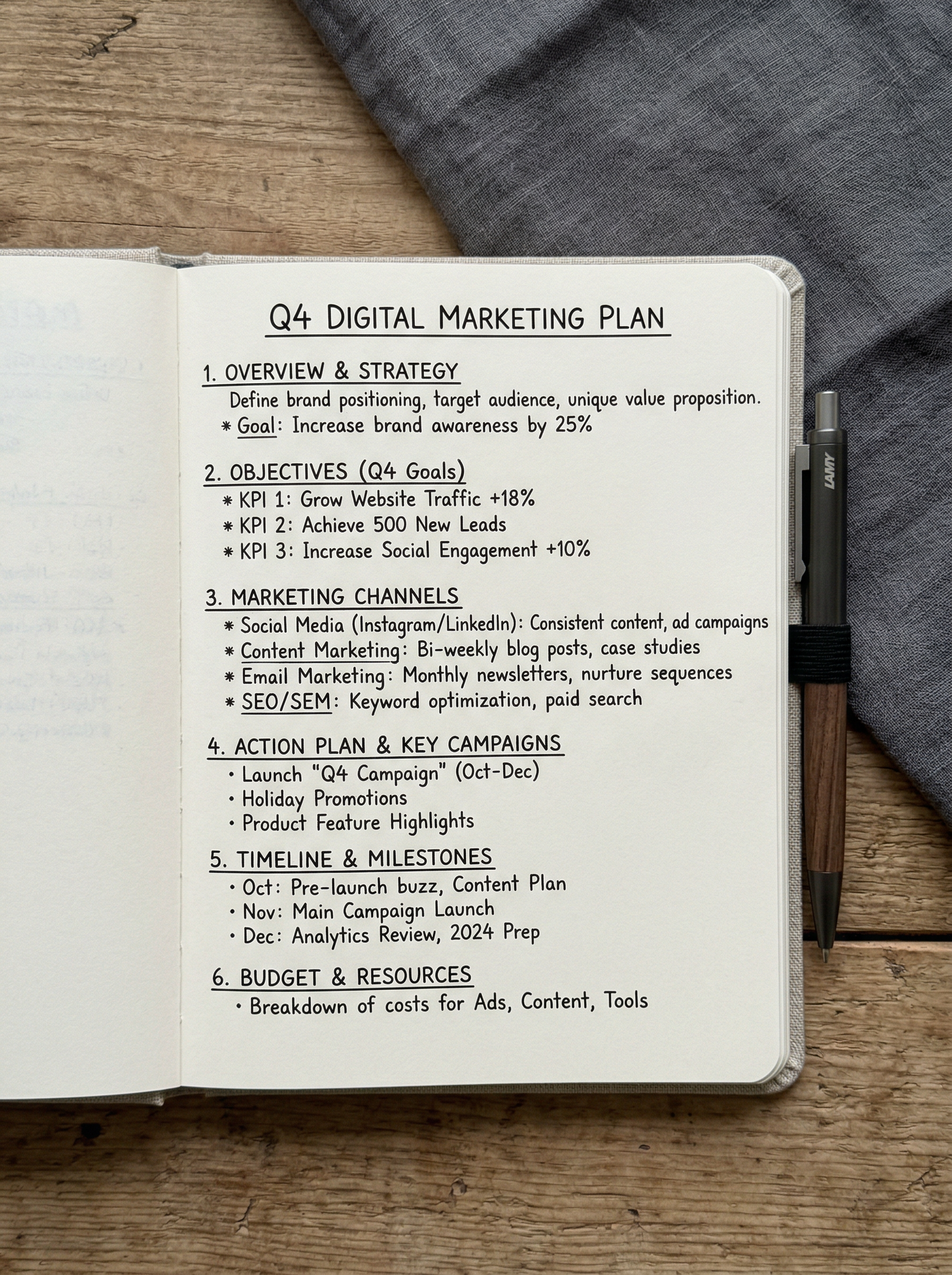
What is the real role of a marketing agency?
A marketing agency shouldn’t just “do marketing.”
Its role is to:
bring clarity to the problems and possible solutions
guide decisions that are aligned to the business goals
align efforts, teams, platforms, and projects
and execute with intent, with a clear goal and objective in mind.
That’s very different from simply posting content or running ads.
A simple way to assess your situation
If you’re unsure where you stand, ask yourself:
Do I know what’s actually driving growth in my business?
Are my marketing efforts connected or fragmented?
Is someone clearly accountable for marketing decisions?
Do I have the capability to sustain growth?
If the answers aren’t clear, the issue isn’t effort: it’s direction. It’s worth take a step back and look at your current situation and the resources you have available, such as personnel, time, budget, and capacity to increase on sales without losing your standard quality. Doing some research on a few possible agencies or solutions (e.g. pros and cons of hiring extra staff for internal marketing) can be a good way to put everything on paper before settling on a decision.
At the end of the day, marketing only feels expensive when there’s no clarity behind it. Once direction is in place, it gets easier to identify what truly need to be done and what is a distraction, decisions become easier, and results start to feel more predictable.
If any of this sounds familiar, the answer isn’t necessarily more activity, instead, it’s understanding what actually matters, what doesn’t, and where to focus next.
That’s the difference between spending on marketing and actually investing in it.
If you are ready to grow and would like to have a chat with your team about your situation, book your free Advisory Session here.